3D scanning and reverse engineering
Have a physical part but no usable model? Depending on its purpose, we prepare a digital surface, cleaned data or an engineering CAD model. A scan alone and a model for manufacturing are different outputs.
Your requirements
Who the service is for
For manufacturing, servicing and development where documentation for an older part is missing, its shape needs modifying or repeat production needs preparing. First we clarify what the data will be used for.
What we need to get started
- Photographs of the part from several sides and approximate dimensions
- The required output: surface data, a CAD model or advice on the approach
- The purpose, material and condition of the part, including wear or damage
- Identified critical dimensions and functional surfaces; any available drawing or measurements
How we work together
From requirements to a usable output
Assess the part and its purpose
Using photographs and your requirements, we check surface accessibility, dimensions and the required output. Copying an appearance and making a functional replacement part involve different scopes of work.
Agree surface preparation
Shiny, transparent or dark surfaces can make scanning difficult. Any matting, markers and handling of the part are agreed in advance.
Scan and clean the data
We capture accessible views, align them and remove noise. Scanning does not automatically fill hidden cavities or uncaptured areas; we agree further measurements.
Create CAD where needed
Reverse engineering turns the reference data into editable geometry. Functional surfaces, correcting wear and requested changes are design work, not simply a scan export.
Check and hand over the output
We check the agreed dimensions and data format. We hand over the scan, cleaned surface or CAD as specified; any printing and measurement report have their own scope.
The result
What you receive
- Point cloud or mesh data capturing the accessible surface of the part
- A cleaned surface for the agreed further processing
- An editable CAD / STEP model if reverse engineering is included
- Agreed inspection and recommendations for subsequent modelling or manufacturing
Choose the output for your inquiry
Practical uses
Which output do you need?
- A digital surface for archiving
- You need to preserve the shape of an existing part. The output may be point cloud or mesh data; we agree the format and level of cleanup according to its further use.
- An editable model for design
- You want to change a dimension, add a hole or adapt a part to an assembly. The scan is reference material followed by separate CAD design work.
- Reference data for a replacement part
- You need a physical replacement. We separate shape capture, functional changes to the model and manufacturing; we define mating dimensions and verification in advance.
Scope and pricing
A quotation based on your requirements
We set the price after assessing the part, photographs or technical materials. The quotation separates scanning, data cleanup, reverse modelling, inspection and any manufacturing.
What affects the price
- Part size, geometric complexity and accessibility
- Surface, its preparation and the number of views needed
- Required accuracy and inspection method
- The extent of data cleanup and filling missing data
- Mesh, cleaned surface or CAD / STEP model
- Reverse engineering, design changes and subsequent manufacturing
Rules and responsibility
We agree capabilities and limitations in advance
- A scan alone does not automatically create a clean parametric engineering model. A STEP file does not itself guarantee a feature history either; we agree the required editability and format in advance.
- Shiny, transparent, very dark or moving parts may need surface preparation or a combination with manual measurement. Hard-to-reach cavities may not be possible to capture.
- Identify critical dimensions and functional surfaces in advance. We agree the required accuracy and inspection method; we do not promise general accuracy for all dimensions without verification.
- A scan also captures wear or deformation in the original. Restoring the original shape, changing the design and manufacturing a replacement are assessed separately.
Follow-on collaboration
Scanning can be followed by technical 3D printing or other manufacturing. The published stand shown below demonstrates our 3D manufacturing, not a scanning project or scanner accuracy.
From the brief to the result.
3D printing and models · Completed project
The estimate was 500 kg. The ramp withstood a load of 7,000 kg.
The ramp weighs approximately 5 kg, measures 700 mm, and its height ranges from 100 to 150 mm. A technician originally estimated its load capacity at 400 to 500 kg.
Actual output
That is approximately fourteen times the original technical estimate and 1,400 times the weight of the ramp itself.
3D printing and models · Completed project
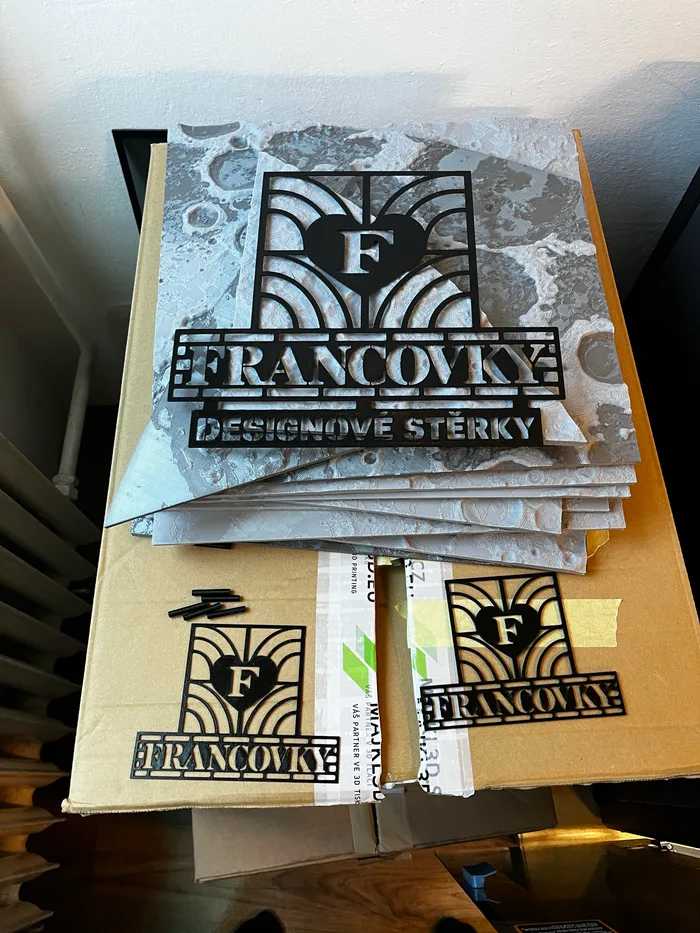
Custom plaster stencils
Made-to-order stencils for decorative plaster with different patterns. We delivered this project within 24 hours, from the initial idea through a prototype to 3D printing.
Actual output
Finished physical stencils for creating patterns in decorative plaster. The photograph shows this particular order.
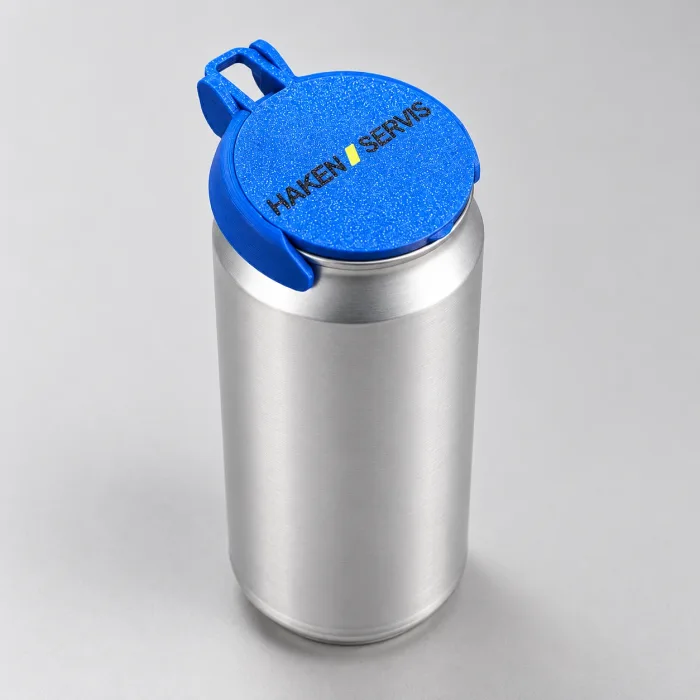
3D printing and models · Completed project
Manufactured can lid samples with custom branding
Physical flip-top can lid samples manufactured by 3D printing. The blue HAKEN SERVIS and black KK make IT versions demonstrate custom branding; these are samples, not a customer delivery.
Actual output
Physical flip-top lid samples carrying HAKEN SERVIS and KK make IT branding. The presentation images are AI-edited versions of photographs of the actual prints.
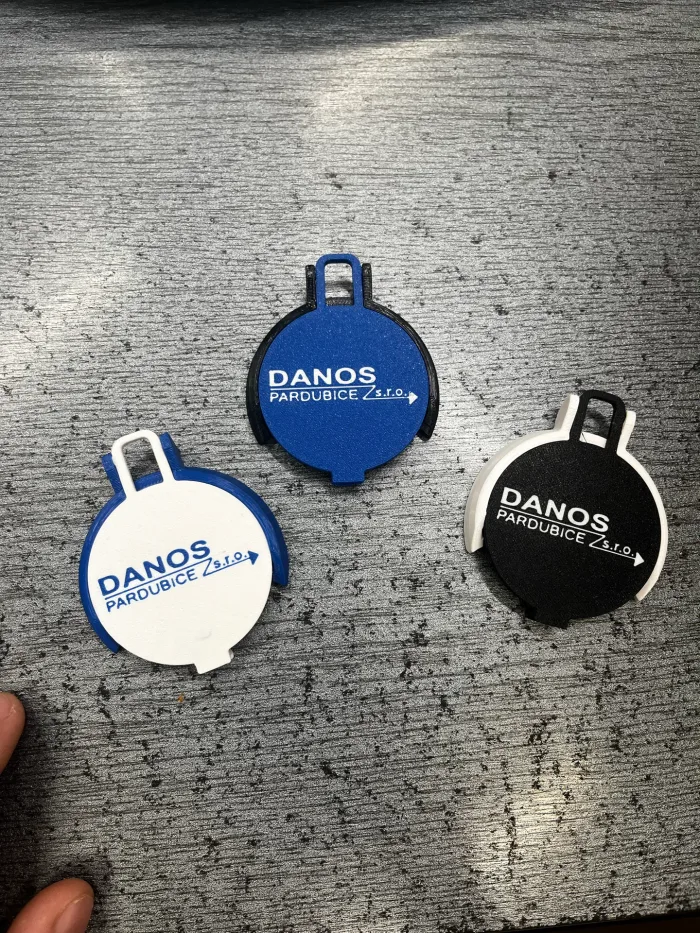
3D printing and models · Completed project
Lids and keyrings for DANOS
A completed and delivered order of 250 lids and 5 keyrings with NFC and QR codes.
Actual output
We delivered 250 lids and 5 keyrings to the customer. NFC and QR codes link to the company website and contact details.
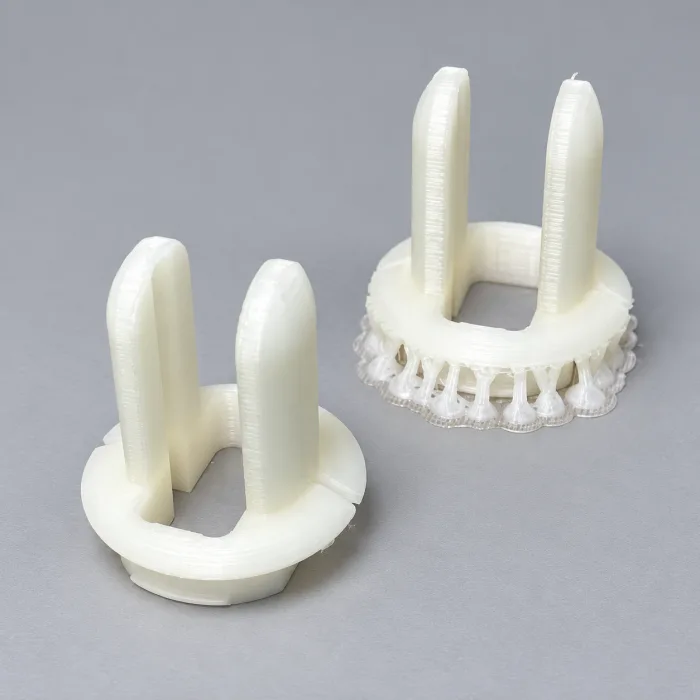
3D printing and models · Completed project
Custom PA6 machine parts
A company needed additional parts for its machinery. We manufactured them by custom 3D printing in PA6 (polyamide 6).
Actual output
Custom PA6 prints for a business customer. This is a completed project, not a universal replacement part available from a catalogue.
3D printing and models · Completed project
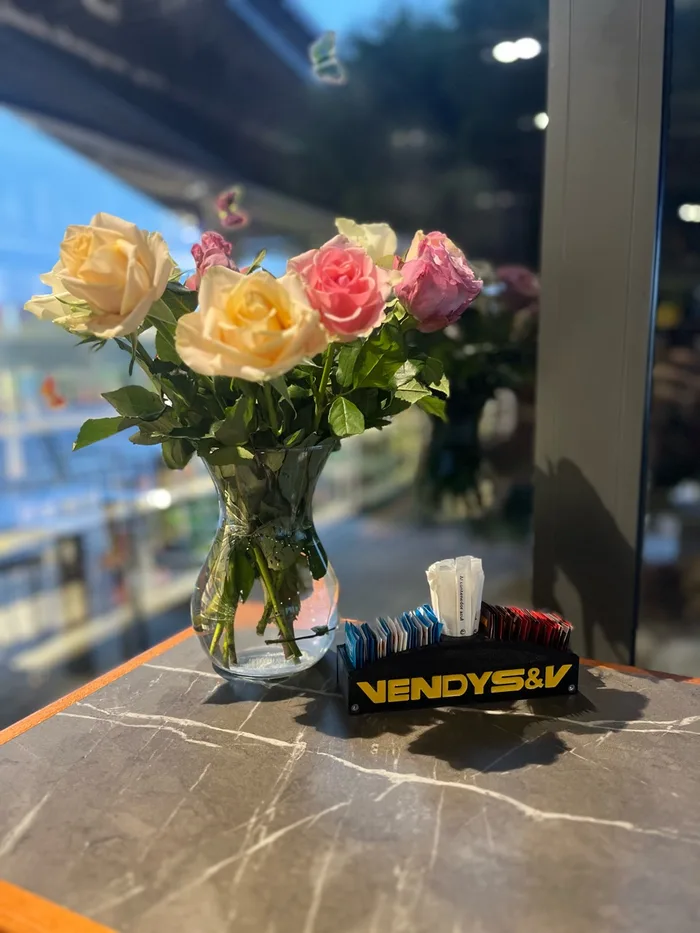
Vendy’s & V modular stand
Ten stands for salt and pepper sachets and accessories are in use at the Vendy’s & V premises. Their three-part construction allows the front and rear panels to be changed for a season or event.
Actual output
10 manufactured stands with interchangeable panels are in use at the Vendy’s & V premises for organising sachets and accessories on a counter. The front panel carries the Vendy’s & V name.
3D printing and models · Completed project
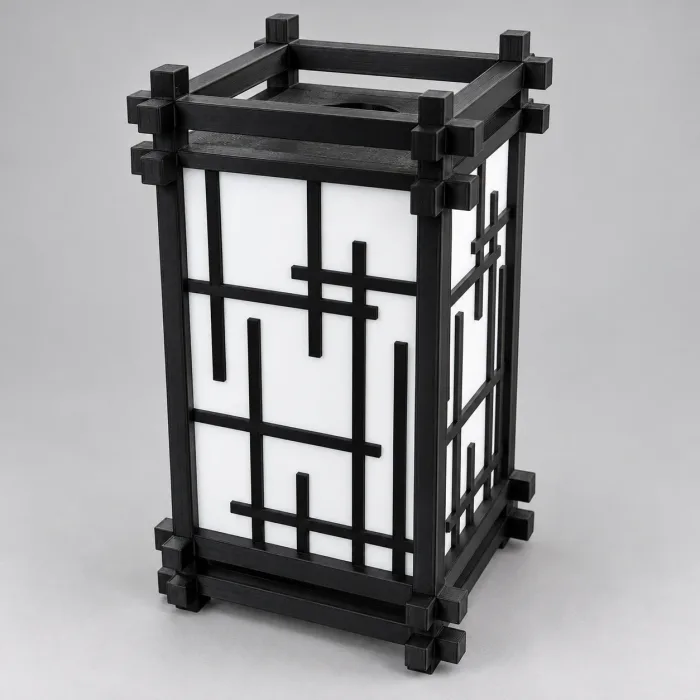
Lamp for a sheltered patio
A black-and-white lamp body with a geometric frame, made by 3D printing. An example of custom manufacturing for the home or a covered garden patio.
Actual output
A finished physical lamp body. The shop distinguishes between the body alone and a version with an LED light and mains power supply.
3D printing and models · Completed project
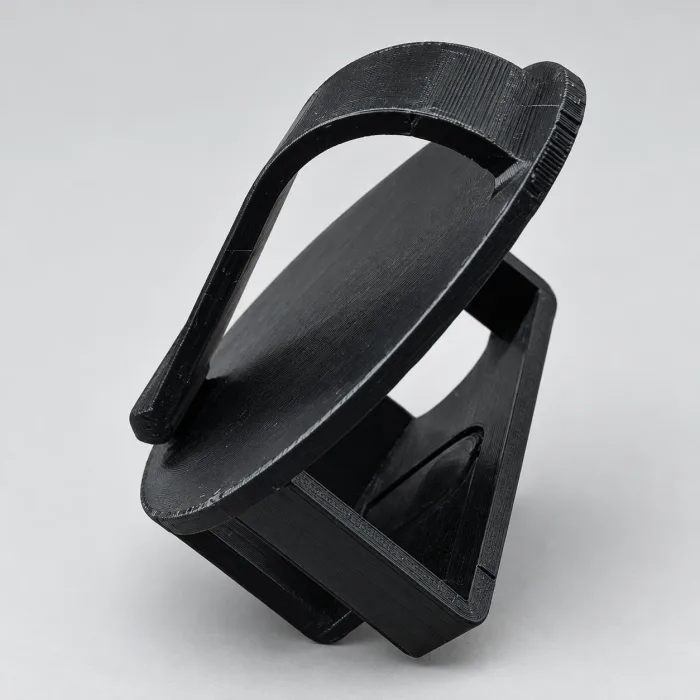
Manufactured car container holder prototype
A manufactured sample/prototype of a 3D-printed VELO container holder for mounting behind the driver’s sun visor. A customer delivery has not been confirmed.
Actual output
A physical plastic sample/prototype holder for mounting behind a sun visor. A customer delivery has not been confirmed. The offer is for the holder only, without the container or its contents.
Before we get started
Frequently asked questions
When does scanning make sense?
When you have a physical part without usable digital data and need to capture its shape, prepare a modification or create manufacturing inputs. For simple regular shapes, manual measurement and direct modelling may be more suitable. We recommend an approach based on the purpose of the output.
What is the difference between a scan and an editable CAD model?
A scan creates a polygon mesh that captures the surface of the part. Dimensional changes, engineering modifications or repeat production often require converting the data into an editable CAD model. We therefore clarify the intended use of the output in advance.
What do you need for an initial assessment of a part?
Photographs from several sides, approximate dimensions and whether you need an archival scan, a copy, an editable model or inputs for further manufacturing. We use these to propose an approach and price.
Can you scan any surface and internal cavities?
Not always. Shiny, transparent, very dark or moving parts may need surface preparation or manual measurement. Hidden cavities may be inaccessible. We agree feasibility and any matting or marking of the part in advance.
Will a STEP model automatically be parametric?
No. STEP transfers geometry and does not itself guarantee a feature history. We agree the required editability, design parameters and any native CAD format before modelling.
How accurate will the output be?
We agree the required accuracy and verification method for the particular part. Identify critical dimensions and functional surfaces. Without a defined scope and measurements, we do not promise general accuracy across the entire scan or model.
Is manufacturing a replacement part included in scanning?
Not automatically. We separate scanning, data cleanup, reverse engineering and physical manufacturing in the quotation. Price depends on size, geometry, surface, accessibility and the required output. A combination from scan to finished part can be agreed according to your requirements.
How do scanning and data processing work?
After assessing the photographs and purpose, we agree how the part will be handed over, surface preparation and the required output. We scan the part, clean the data and check the agreed surfaces or dimensions. If you order reverse engineering, CAD modelling follows. We deliver the output in the format agreed beforehand.
Related services
Back to the 3D divisionLet us discuss your part or manufacturing requirements
Describe the purpose, approximate dimensions and quantity. Attach approved photographs or technical materials; if you are unsure about the output, we will suggest an approach.